On 14 October 2026, EE Times published a report on the CPO Summit hosted by Ayar Labs, with speakers from Meta, Broadcom, AMD, MediaTek, Lumentum, Wiwynn and Upscale AI [1]. The report is partner content produced with Ayar Labs, so treat it as one view of the market. We are not repeating its market forecasts. We are reading it for what it implies on the assembly line, which is where an equipment buyer has to make decisions.
What was said that matters to assembly
Three statements in the report bear directly on packaging and alignment.
- Optics becomes part of the system. MediaTek's chief architect Bhushan Chitlur said that the moment you integrate optics, it stops being a component and becomes a system. He noted that large AI ASICs carry tens of thousands of dollars of HBM, so a single optical engine failing after attach can force perfectly functional silicon to be discarded. His conclusion: yields at both the component and package-attach levels must be near perfect for the economics to work [1].
- Manufacturing readiness, not only the optics. Wiwynn's Harold Liu listed thermal management, power delivery, serviceability and optical loss as core design priorities, and said volume production needs design for manufacturing from the outset, cleaner assembly environments and greater automation [1].
- Supply chain scale. Lumentum's CTO Matt Sysak said constraints extend beyond lasers to substrates, materials, connectors and fiber, and that "this industry is not ready for the types of volumes that CPO is going to require" [1].
The report also gives timing as the speakers framed it: a surge in CPO demand expected to begin in 2028, with Pat Gelsinger naming 2028 as the year he expects the pieces to come together at scale [1]. Early deployments were expected in switches first, with compute endpoints among the last adopters [1]. Other recent coverage points the same way: TrendForce reported in July 2026 that NVIDIA had begun shipping its Spectrum-X CPO switch to select partners and that Broadcom continued limited shipments of its 51.2T switch [2].
Why attach yield changes how you buy equipment
In a pluggable module, a bad optical sub-assembly costs you the module. In a co-packaged design, the speakers describe a bad attach as potentially costing you the expensive silicon around it [1]. That moves three items up the equipment checklist.
1. Alignment you can verify, not just claim. Active alignment uses measured optical power while the lens or fiber is moved, so the bond position is chosen by the result, not by a nominal coordinate. For a coupling station, the figures to ask for are linear accuracy and coupling accuracy, and what they were measured on.
2. Fewer hands in the process. The call for cleaner assembly and more automation is a call to remove manual fiber handling and part transfer. Automatic fiber plug in and out, and automatic loading, are not conveniences at this stage. They are repeatability measures.
3. A record for every part. When one failure can scrap costly silicon, root cause analysis needs per-part data: optical power curves, dispensing parameters, inspection images. Ask whether the machine logs these and whether it connects to your MES.
| What the summit said [1] | Assembly implication | What to check on the machine | C20 data point |
|---|---|---|---|
| Integrated optics stops being a component and becomes a system | A failed optical engine after attach can scrap good silicon | Closed-loop optical power feedback during alignment | Real-time optical power acquisition |
| Component and package-attach yield must be near perfect | Alignment error budget must be well inside the coupling window | Linear accuracy and repeatability, not only peak speed | ≤50 nm linear accuracy, 50 to 100 nm coupling accuracy |
| Volume production needs design for manufacturing, cleaner assembly and more automation | Manual steps and operator variation become yield risks | Automatic fiber plug in and out, loading and unloading | Automatic fiber insertion and removal; auto load/unload option |
| Operability: test, monitoring, service workflows | Every bond needs a data record for root cause analysis | Per-part production data and MES connection | Full production data traceability, MES connection |
| Thermal swings affect temperature sensitive optics | Adhesive dispensing and cure must stay consistent | Precision dispensing and lens inspection | Precision dispensing; lens position and appearance inspection |
Where ENG equipment fits
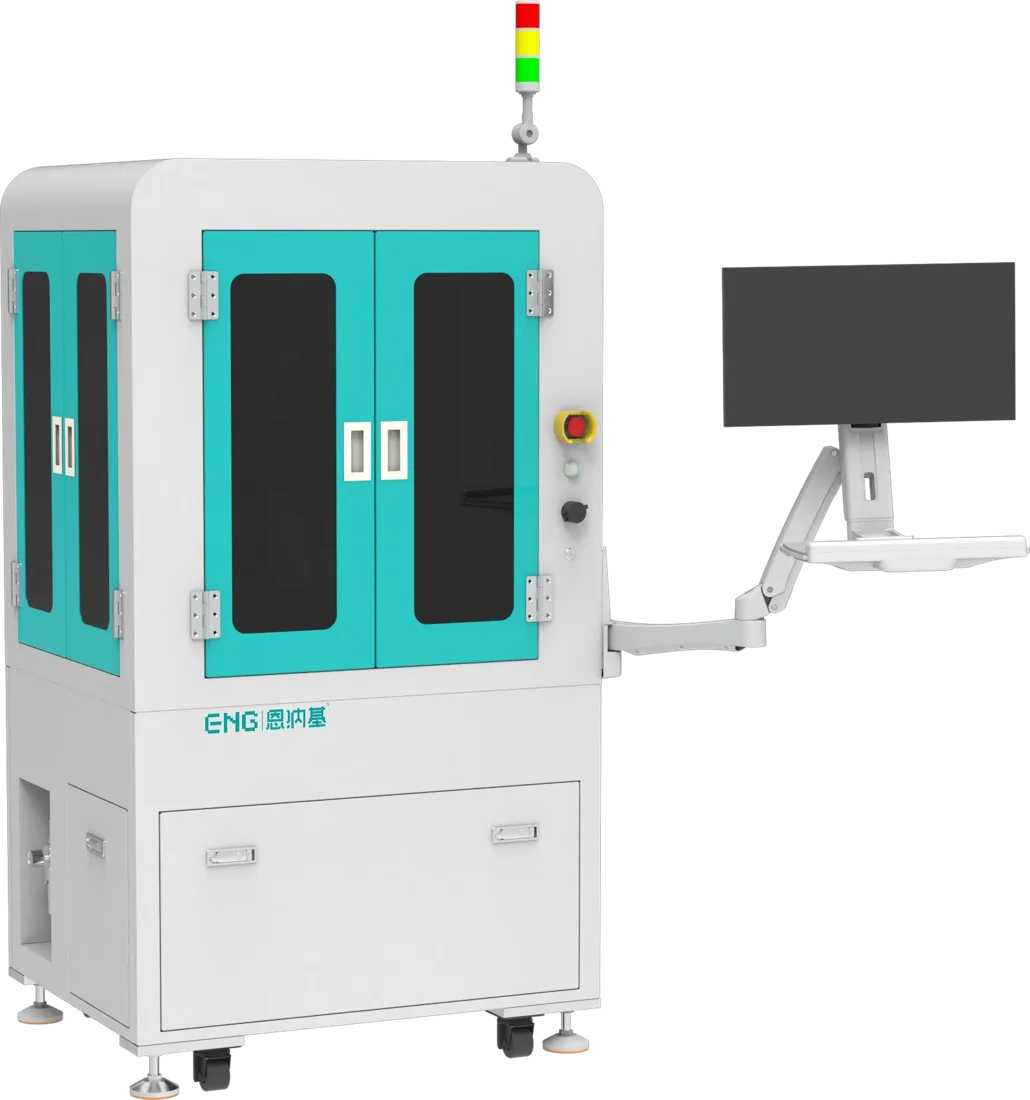
The C20 active alignment and coupling system is built for lens coupling in silicon photonics modules and CPO optical engines. Published ENG specifications: XY accuracy (local) ≤±0.3 μm, angle (local) ≤±0.003°, coupling accuracy 50 to 100 nm, linear accuracy ≤50 nm, with production takt of 2 to 5 minutes per part in the single lens version and 6 to 8 minutes in the dual lens version. It acquires optical power in real time, inserts and removes fiber automatically, dispenses adhesive and inspects lens position and appearance. Automatic loading and unloading is an available option, and production data can be traced and connected to MES.
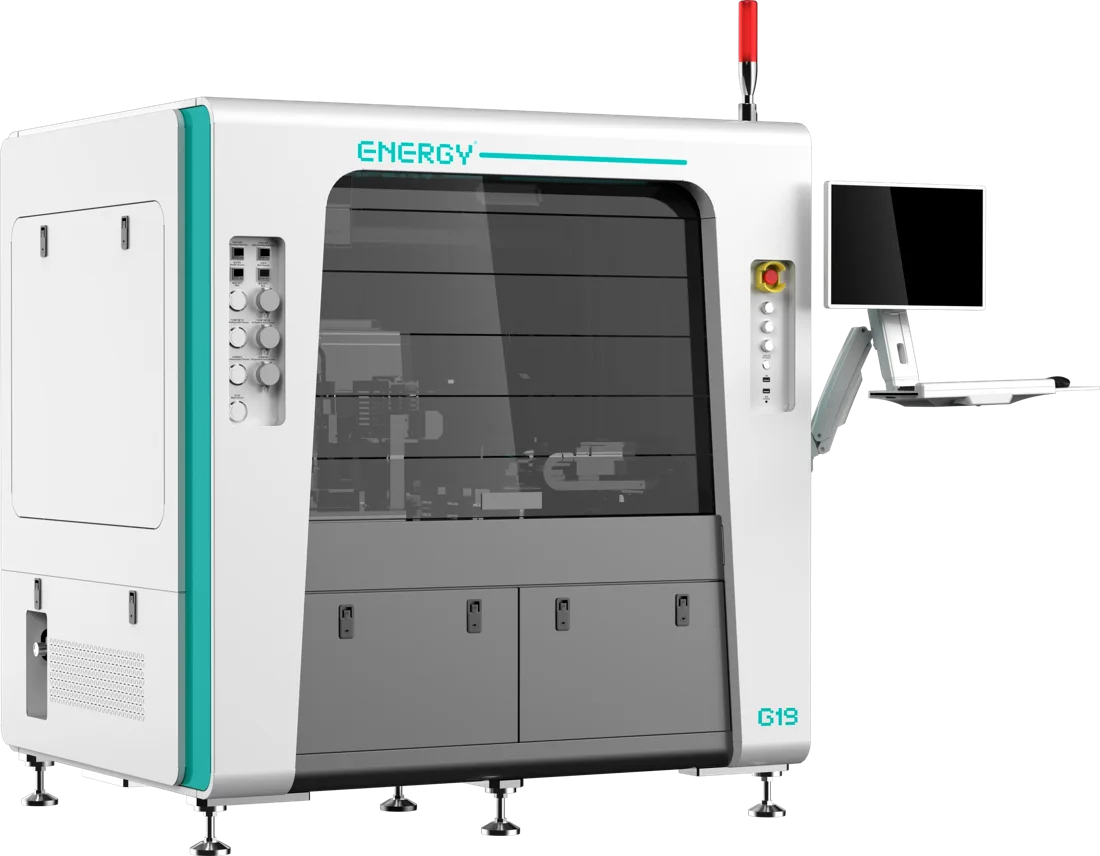
Upstream of coupling, laser and chip placement sets the starting error. The G19 high speed die bonder specifies ±3 μm @3σ XY placement accuracy, and for eutectic laser attach the EX20 is covered in our AuSn process window guide. See also the CPO fiber coupling and optical module die bonder application pages.
What we would not conclude from the report
- It does not give a specific alignment tolerance for CPO. Tolerance depends on the optical design, so confirm it with your own coupling budget.
- It is not a statement about any single supplier's readiness. The speakers described the whole ecosystem.
- Volume timing is the speakers' expectation, not a schedule. Qualification work for new lines usually starts well before volume.
How to use this in a sample evaluation
If you are planning a CPO or silicon photonics coupling line, send us the lens and fiber array drawings, the target coupling loss, the adhesive and the cure method. BondVane coordinates a free sample evaluation with ENG engineers, and you get the achieved alignment, takt time and the data log format before you request a quotation:
- Your coupling loss target and how you measure it.
- Lens and fiber array geometry, and the adhesive used.
- Required automation: manual load, auto load, MES connection.
- Annual volume range for the line you are planning.